Preparing Your Mind, Not Just Your Pantry: The Mental Resilience Guide
The psychological side of emergency preparedness is almost never discussed — but it determines how well you actually function when things go wrong.
By ReadyNotRich · Emergency preparedness guidance for everyday households · Published 13 June 2026

Psychological preparation matters as much as physical supplies, and the recurring finding in disaster-recovery research is that the communities which cope best are not the ones holding the largest stockpiles. They are the ones with strong social ties and clear, agreed plans. This is an uncomfortable result for an industry built on selling equipment, and it is also the most useful thing to know about preparedness: the highest-value things you can do cost nothing, take an evening, and involve writing and talking rather than buying.
The Panic Problem
Under acute stress, cognitive function degrades in specific and well-documented ways. Working memory narrows, attention tunnels onto the most immediate threat, and decision-making slows exactly when speed matters. This is not a character flaw and willpower does not fix it. It is why trained responders — pilots, surgeons, firefighters — work from checklists rather than recall, despite knowing the material far better than you know your own household plan. The entire goal of mental preparedness is to move decisions out of the moment of crisis and into a calm afternoon, where your brain is working properly.
Your Written Emergency Plan
The single highest-value preparedness activity is writing one page. It should cover where to meet if you cannot get home, who to call first with the number written down rather than only stored in a phone, what to do in a fire, a flood and an evacuation, and where the gas, water and electricity shutoffs are. Add who is responsible for children, pets and any vulnerable relative, because unassigned responsibilities become nobody's. Keep it to a single sheet and put a copy on the fridge and in each go-bag. A plan that runs to eight pages is a document nobody will ever read.
Write It on Paper
This deserves its own point because it is the failure that catches out otherwise well-prepared households. A phone is a single device with a battery, a screen that breaks, and a cloud dependency. When it dies it takes every number you know with it, along with your plan, your documents and your map. Printed paper in a waterproof bag has no battery and no dependencies. Write down the numbers you would need if your phone were gone: family, a relative outside the area, your doctor, your insurer, your utility's emergency line. Most people cannot recite a single one from memory.
Practice Makes Automatic
A household fire drill feels faintly ridiculous. Do it anyway, because that awkwardness is the entire mechanism. Rehearsed actions tend to happen automatically under stress while unrehearsed ones frequently do not happen at all, which is the whole reason schools and workplaces drill rather than simply circulating instructions. Walk your evacuation route. Time yourself packing the bag. Find your stopcock and check it turns, before 2am and a burst pipe rather than during one. Two drills a year is enough to build reliable habits, and each one takes less time than watching a television episode.
The Role of Community
Social isolation is among the strongest predictors of poor disaster outcomes. The people who died during the 1995 Chicago heat wave were overwhelmingly those with weak social connections — elderly, living alone, with nobody who would notice. That finding has been reproduced across very different events, and its practical implication is unglamorous: knowing your neighbours is infrastructure. Know who on your street is elderly, unwell or living alone. Know who has a generator, medical training or a van. Agree who checks on whom. This costs nothing and is more protective than most of what can be bought.
Managing Children's Anxiety
Children do better when emergencies have been discussed calmly in advance than when they are explained for the first time during one. Frame preparedness as an ordinary household routine, in the same register as a fire drill or a seatbelt, and do it while nothing is happening. The most effective single technique is to give each child a concrete job: carrying their own small bag, knowing the meeting point, knowing a phone number by heart. A defined role converts helplessness into something manageable, and it also means they are doing something useful rather than waiting to be managed.
Decide the Hard Things Now
Some decisions are genuinely difficult and should not be made under pressure. At what point would you leave rather than stay? Who collects the children, and what is the fallback if that person cannot? What do you take if you have five minutes, and what do you accept losing? Where do you go if the obvious destination is inside the affected area? Talk these through once, agree them, and write the answers down. The value is not that your plan will survive contact with reality — it often will not — but that you will not be negotiating with your household while a situation develops.
After the Emergency
Recovery is part of preparedness and is routinely left out. A significant minority of people directly affected by a disaster experience lasting psychological effects, with rates varying widely by event type and severity, and early access to social support is consistently the strongest protective factor. Practically: keep routines where you can, sleep and eat on something like a schedule, talk to someone about what happened, and limit repetitive consumption of coverage of the event, which reliably makes things worse. Accept offers of practical help rather than declining them out of politeness.
The Cheapest Preparedness There Is
Everything on this page is free. One page written and stuck to the fridge. A list of phone numbers on paper. Two drills a year. Three neighbours known by name. One conversation with your household about the decisions you would rather not make in a hurry. Set against a thousand pounds of equipment, this is the part that the research actually supports, and it is the part almost everyone skips because it is not purchasable and produces nothing to photograph. It is also what the households who cope well turn out to have had all along.
Your mental resilience checklist
- Write a one-page household emergency plan and put a copy on the fridge and in each go-bag.
- Include your meeting point, first call, fire and flood actions, and the location of the gas, water and electricity shutoffs.
- Assign responsibility explicitly for children, pets and any vulnerable relative.
- Write key phone numbers on paper, including a contact outside your area, your doctor, your insurer and your utility.
- Find your stopcock and check it actually turns.
- Run two household drills a year: walk the evacuation route and time packing the bag.
- Learn the names of at least three neighbours, and note who is elderly, unwell or living alone.
- Agree who checks on whom, and who has useful equipment or skills on your street.
- Talk to children calmly about the plan before anything happens, and give each one a specific job.
- Decide in advance the hard questions: when you would leave, who collects the children, and what you accept losing.
- Agree a fallback destination outside the likely affected area.
- Plan for afterwards: keep routines, limit repetitive news, talk to someone, and accept practical help.
Frequently asked questions
Why is mental preparedness important for emergencies?
Mental preparedness is as important as physical supplies in an emergency. Under acute stress, working memory narrows and decision-making slows. Pre-made decisions, written plans, and practiced drills offload cognitive load — allowing you to act quickly and correctly when it matters most.
How do I make an emergency plan for my household?
A household emergency plan should cover: a meeting point if you can't get home, key emergency contact numbers written down, what to do in a fire, flood, or evacuation, how to shut off your gas, water, and electricity, and where your emergency supplies are stored. Write it down and review it twice a year.
How often should I practice emergency drills at home?
Two household emergency drills per year is enough to build reliable habits. Practice evacuating with your bug-out bag, time how long it takes, walk your evacuation route, and test that your radio and torch work. Rehearsed actions happen automatically under stress — unrehearsed actions often don't happen at all.
How do I talk to children about emergency preparedness?
Frame emergency preparedness as a normal, calm household activity — like a fire drill at school. Give children a specific role: carrying their own small bag, memorising a parent's phone number, or knowing the family meeting point. Research shows children who have age-appropriate emergency conversations show lower trauma symptoms after actual disasters.
Why does a written plan matter more than simply knowing what to do?
Because acute stress measurably narrows working memory and slows decision-making. Information you can recall easily on a calm afternoon becomes unreliable mid-emergency. This is precisely why trained responders work from checklists rather than memory, and why writing the plan down on paper — not only in a phone — is the highest-value hour in household preparedness.
What helps most in the weeks after an emergency?
Early access to social support is consistently the strongest protective factor in recovery. Practically, that means keeping routines where you can, talking to someone about what happened, limiting repetitive news consumption, and accepting offers of practical help rather than declining them. Recovery is part of preparedness, and planning for it in advance is legitimate.
Related guides
The Government Is About to Tell Every UK Household to Prepare — Here Is the Checklist, and What It Leaves Out
The Cabinet Office has confirmed a multi-year national resilience campaign launching this year, and the 2026 National Risk Register just moved loss of drinking water to the top of the list. Here is what the official advice says, and the specifics it does not.
Read guide →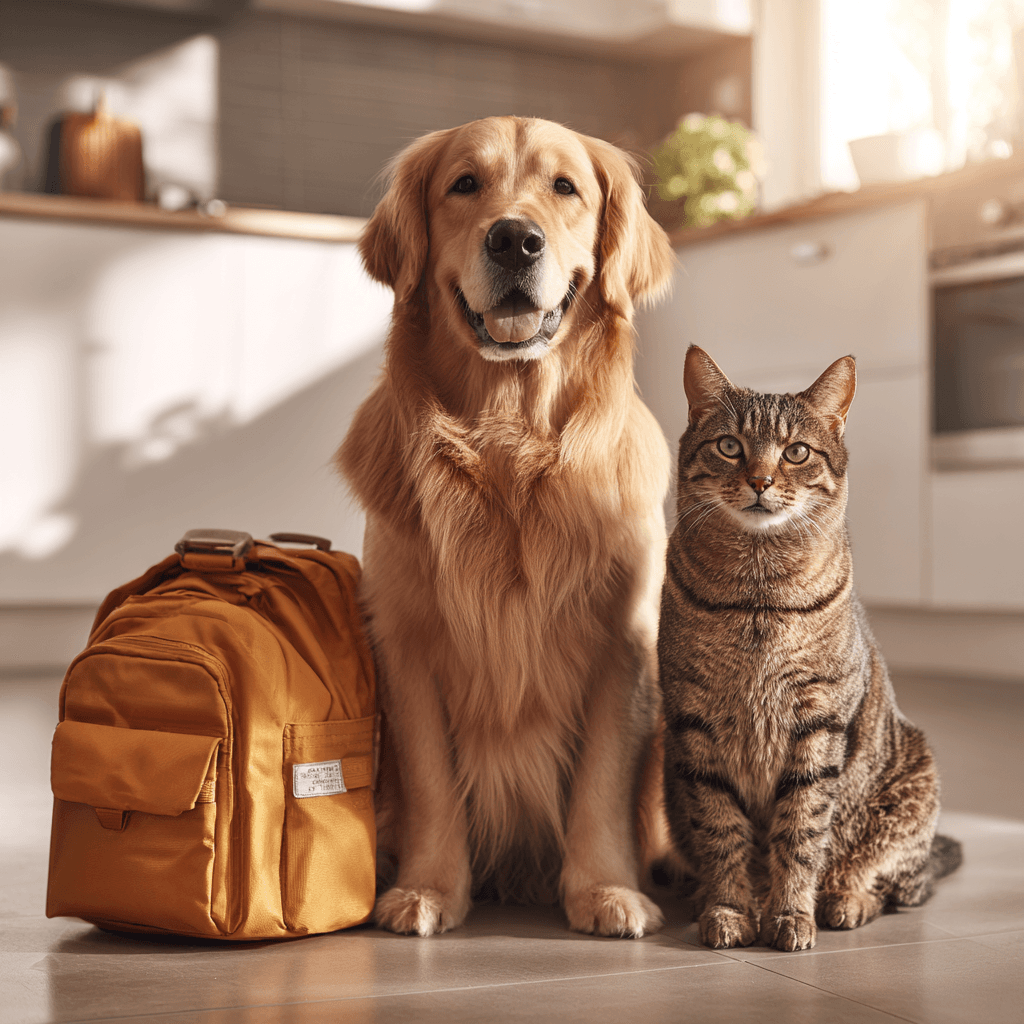
Prepping for Pet Owners: The Emergency Guide Most People Skip
71% of US households owned at least one pet in 2024 according to the American Pet Products Association, but most emergency plans don't account for them. Here's how to prepare your animals for any scenario.
Read guide →
Your Financial Emergency Kit: Protecting Your Money When Everything Goes Wrong
Bankrate's January 2026 Emergency Savings Report found 59% of Americans could not cover a $1,000 emergency expense from savings. Here's how to build financial resilience alongside your physical preps.
Read guide →From ReadyNotRich
The Emergency Binder
Supplies are the easy half. The other half is the information you cannot look up when the power is out — policy numbers, prescription doses, where the stopcock is, who collects the children. 22 printable A4 pages to write it all down once. It is coming soon — join the waitlist and we will tell you the moment it is ready.